
Brian Boru (about 941 to 1014) was the King of Munster who became High King of Ireland in 1002 and united most of the island under one ruler. He died at the Battle of Clontarf, near Dublin, on Good Friday, April 23, 1014, in the victory that broke the power of the Viking kingdom of Dublin and its Leinster allies. He is the ancestor of the O'Brien family, and his name is tied forever to the Irish harp.
His Irish name is Brian Bóruma mac Cennétig, pronounced roughly BREE-an BOR-uh-ma. In English it is usually said BRY-an buh-ROO.
What Does Boru Mean?
Bóruma is usually explained as "of the cattle tributes," from the tribute of cattle he took from Leinster. Another explanation links it to Béal Bóramha, an ancient fort near Killaloe in County Clare, close to his royal seat at Kincora.
From Munster to High King
Brian was born into the Dál gCais, a small dynasty on the banks of the Shannon in what is now County Clare. After his brother Mathgamain, King of Munster, was murdered in 976, Brian avenged him and took the kingship of Munster. Over the next 25 years he defeated rivals across Ireland, and in 1002 Máel Sechnaill mac Domnaill recognized him as High King. In 1005, at Armagh, a scribe recorded him in the Book of Armagh as Imperator Scotorum, "Emperor of the Irish."

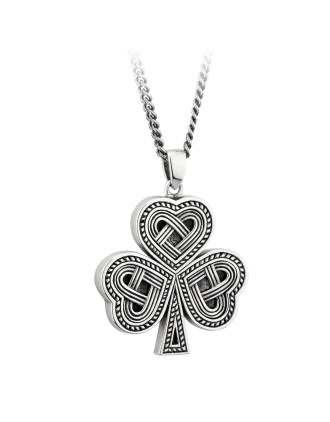
Irish Harp Pendant — $129.99
Ireland's national emblem in two-tone metal.

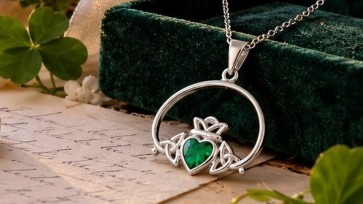
Sterling Silver Men's King Claddagh Necklace — $229.99
A crowned Claddagh for the king of the house.
The Battle of Clontarf, 1014
In 1014 the King of Leinster, Máel Mórda, rose against Brian with Sigtrygg Silkbeard, the Norse king of Dublin, and Viking allies from across the Irish Sea. The armies met at Clontarf on Good Friday. Brian's forces won, but Brian, then in his seventies, was killed in his tent after the fighting, traditionally by the Viking Bródir. His son Murchad also died. Brian was buried at Armagh.
The Brian Boru Harp
The famous "Brian Boru harp" in the Old Library of Trinity College Dublin is one of the oldest surviving Irish harps. It was actually made centuries after Brian's death, probably in the 14th or 15th century, but it carries his name in legend. It is the model for the harp on Ireland's coat of arms, coins and passports, and a harp has been the emblem of Guinness since 1862. Read more in our story of the Irish harp.
Brian Boru's Legacy
Brian showed that Ireland could be ruled as one kingdom, and his family took their surname from him: the O'Briens, Ó Briain, "descendants of Brian," became one of Ireland's great families. Find your own family's roots in our guide to Irish last names and their meanings.

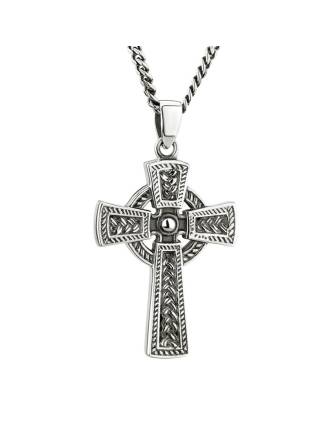
Irish Harp Cross Necklace — $119.99
The harp set within a cross. Special order, 1–2 weeks.

Irish Harp Kilt Pin — $34.99
A harp kilt pin for the man in your life.
Shop Irish Harp Jewelry
The harp of Brian Boru, Ireland's national emblem, in pendants, crosses and pins.
Free U.S. shipping on orders over $250. Designing Irish jewelry since 2006.
Frequently Asked Questions
Who was Brian Boru?
Brian Boru was the King of Munster who became High King of Ireland in 1002 and united most of the island under his rule. He died at the Battle of Clontarf on Good Friday, 1014. He is the ancestor of the O'Brien family and one of Ireland's most famous kings.
How did Brian Boru die?
Brian Boru died at the Battle of Clontarf, near Dublin, on April 23, 1014. His army defeated the forces of Leinster and the Viking kingdom of Dublin, but Brian, then in his seventies, was killed in his tent after the battle, traditionally by the Viking Bródir. He was buried at Armagh.
What does Boru mean?
Boru, in Irish Bóruma, is usually explained as meaning of the cattle tributes, from the tribute of cattle Brian took from Leinster. Another explanation links the name to Béal Bóramha, an ancient fort near Killaloe in County Clare, close to his royal seat at Kincora.
Is the Brian Boru harp really his?
No. The harp known as the Brian Boru harp, kept at Trinity College Dublin, was made centuries after his death, probably in the 14th or 15th century. It is one of the oldest surviving Irish harps and is the model for the harp on Ireland's coat of arms and coins.
Is Brian Boru related to the O'Briens?
Yes. The O'Brien surname, in Irish Ó Briain, means descendant of Brian and comes directly from Brian Boru. His descendants ruled Thomond, in present-day Clare and Limerick, for centuries, and the O'Briens remain one of the best-known Irish families.
About the Author
Jennifer Derrig founded The Irish Jewelry Company in 2006. A graduate of the Fashion Institute of Technology (FIT), she designs Celtic and Irish jewelry that carries the stories, symbols and language of Ireland. Follow Jennifer on Facebook, Instagram and Pinterest.