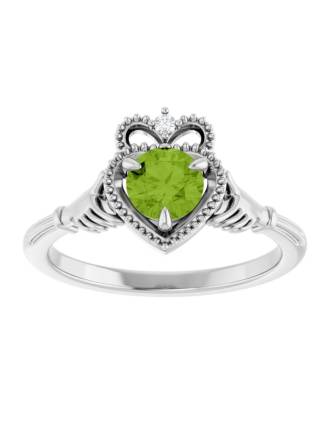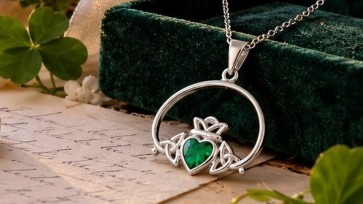

Yes, lab-created emeralds are real emeralds. A lab-grown emerald has the same chemistry, crystal structure, hardness and color as an emerald mined from the earth. The difference is where it formed: in a laboratory over weeks or months rather than underground over millions of years. A simulated emerald is different. It is a look-alike, such as green glass or cubic zirconia, and is not emerald at all.
Here is how the three compare, how to tell them apart, and how to choose the right emerald for a ring or gift.
Natural, Lab-Created and Simulated Emeralds Compared
- Natural emerald: green beryl colored by chromium or vanadium, mined mainly in Colombia, Zambia and Brazil. Almost always contains inclusions, which jewelers call the jardin, French for garden. Most are treated with oil or resin to improve clarity. The most expensive of the three.
- Lab-created emerald: the same green beryl, grown by flux or hydrothermal methods. Usually cleaner and more evenly colored than natural stones of similar size, at a much lower price. Also called lab-grown, laboratory-created, created or synthetic emerald.
- Simulated emerald: a green stone that imitates emerald, most often cubic zirconia or glass. Bright and durable enough for everyday jewelry and the most affordable option, but it is not emerald.
Are Lab-Created Emeralds Worth It?
For most buyers, yes. A lab emerald gives you true emerald color and brilliance with fewer inclusions, and it avoids the environmental cost of mining. Natural emeralds hold their appeal for buyers who want a stone formed by nature, and fine natural stones are rarer and command far higher prices. Neither choice is wrong. It depends on budget and what the stone means to you.
Lab emeralds are not new. Carroll Chatham grew the first commercially successful lab emeralds in the 1930s, and gemologists have studied them ever since.

14K Yellow Gold 1 ct. Lab Grown Emerald Trinity Engagement Ring — $1,999.99
A lab-grown emerald on a Celtic trinity knot band.

10K White Gold Natural Emerald Trinity Engagement Ring — $2,199.99
A 5mm natural emerald on a trinity knot band.
How to Tell a Lab Emerald From a Natural One
You usually cannot tell by eye. A gemologist looks for telltale inclusions under magnification: natural emeralds show crystals, fluid pockets and fractures from their growth in rock, while lab stones show growth patterns or flux traces from the laboratory. An independent gem lab report is the surest proof for a high-value stone.
In the United States, the Federal Trade Commission requires sellers to disclose a lab-grown emerald clearly, using terms such as lab-grown, laboratory-created or synthetic. A stone described only as "emerald" should be natural.
Emerald Care
Emerald rates 7.5 to 8 on the Mohs scale, but its inclusions make it more fragile than the number suggests. Clean emerald jewelry with lukewarm water, mild soap and a soft brush, and avoid ultrasonic and steam cleaners, which can damage oiled natural stones.
Why Emeralds Mean So Much in Ireland
Ireland has been called the Emerald Isle since William Drennan used the phrase in his 1795 poem "When Erin First Rose." Emerald is also the birthstone for May and the traditional gift for a 55th wedding anniversary. Set in a Claddagh, an emerald heart says love and loyalty in Ireland's own color.

Sterling Silver CZ Emerald Heart Claddagh Ring — $129.99
Our best-seller: a 6mm simulated emerald heart.
Shop Emerald Rings
Simulated, lab-grown and natural emerald rings, including Emerald Claddagh rings and Celtic trinity knot engagement rings.
Free U.S. shipping on orders over $250. Designing Irish jewelry since 2006.
Browse all emerald jewelry or our emerald Claddagh rings.
Frequently Asked Questions
Are lab-created emeralds real emeralds?
Yes. Lab-created emeralds are real emeralds with the same chemical composition, crystal structure, hardness and color as mined emeralds. They are grown in a laboratory rather than formed underground. Simulated emeralds, such as green glass or cubic zirconia, are imitations and are not emerald at all.
Are lab emeralds cheaper than natural emeralds?
Yes. Lab-created emeralds cost a fraction of the price of natural emeralds of similar size and color, and they usually have fewer inclusions. Fine natural emeralds are rare, which is why they command much higher prices, especially large stones with rich green color.
Can a jeweler tell if an emerald is lab-grown?
A trained gemologist can usually tell by examining the inclusions under magnification. Natural emeralds show crystals and fluid pockets from their growth in rock, while lab stones show growth patterns or flux traces. For valuable stones, an independent gem lab report gives certainty.
What is the difference between a simulated and a lab-created emerald?
A lab-created emerald is real emerald grown in a laboratory. A simulated emerald is a different material, such as cubic zirconia or glass, cut and colored to look like emerald. Simulated stones are the most affordable, while lab-created stones have true emerald properties.
Do lab-created emeralds last?
Yes. Lab-created emeralds have the same hardness as natural emeralds, 7.5 to 8 on the Mohs scale, and are often more durable because they have fewer inclusions. Clean them with warm soapy water and a soft brush, and avoid knocks against hard surfaces.
About the Author
Jennifer Derrig founded The Irish Jewelry Company in 2006. A graduate of the Fashion Institute of Technology (FIT), she designs Celtic and Irish jewelry that carries the stories, symbols and language of Ireland. Follow Jennifer on Facebook, Instagram and Pinterest.