
The púca (also spelled pooka, phouka or puca) is a shape-shifting spirit of Irish folklore that most often appears as a sleek black horse with glowing eyes, but can also take the form of a goat, hare, cat, dog or a man with animal ears. Neither wholly good nor evil, the púca can bring good fortune or ruin depending on how it is treated. It is most closely tied to Samhain and to November 1, remembered in Irish tradition as Púca's Day.
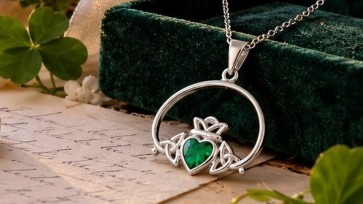
Inspired by Irish folklore? Explore our collection of Irish jewelry, from Celtic knots to Claddagh rings.
Púca at a Glance
- Irish name: Púca (plural púcaí)
- Pronunciation: POO-kah
- Other spellings: Pooka, phouka, puca, pwca (Welsh), Puck (English)
- Meaning: Spirit, sprite or goblin
- Favorite forms: Black horse, goat, hare, cat, dog, or a man with animal features
- Nature: Trickster that can help or harm
- Season: Samhain, October 31, and Púca's Day, November 1
- Place named for it: Poulaphouca, County Wicklow, meaning the púca's hole
What Is a Púca?
The púca is one of the oldest and most unpredictable creatures in Irish folklore. It belongs to the fairy world of the aos sí, but unlike the fairies who travel together in processions, the púca is a solitary wanderer. It roams lonely hills, bogs and back roads after dark, and it can change its shape whenever it pleases.
Country people across Ireland spoke of the púca with a mixture of fear and respect. Meet it on a bad night and it might carry you off on a terrifying ride. Treat it well and it might warn you of danger, guide you home, or tell you something about your future. That uncertainty is the heart of every púca story.
Pooka Meaning, Spelling and Pronunciation
The Irish word púca means a spirit, sprite or goblin. Pooka is simply the English spelling of the same word, written the way it sounds: POO-kah. You will also see it written phouka, phooka and puca, and the Irish plural is púcaí. Some writers connect the name to the Irish word poc, a male goat, one of the creature's favorite shapes.
Related names appear across the British Isles. In Wales the creature is the pwca. In England it became Puck, the mischievous fairy of Shakespeare's A Midsummer Night's Dream. In the Channel Islands it is known as the pouque. Every version shares the same character: a clever, shape-changing trickster who blurs the line between blessing and mischief.
The Púca's Many Forms
The Black Horse
The púca's most famous form is a sleek, dark horse with a long, untamed mane and eyes that shine gold or yellow in the dark. In this shape it is at its most dangerous, because it loves to trick a traveler into climbing onto its back.
The Goat
The púca often appears as a black goat, sometimes with great curling horns. Its eyes give it away: they hold far too much intelligence for an ordinary animal.
The Hare or Rabbit
A sleek black or white hare that crosses a moonlit road with an unnaturally long stride may be a púca. This form later inspired one of the most famous pookas in film, the giant rabbit Harvey.
The Cat and the Dog
The púca can take the shape of a large black cat with burning eyes or a dark dog that follows travelers along the road. In these forms it is often mistaken for other creatures of Irish night lore.
The Púca in Human Form
When the púca takes a human shape, it usually appears as an old man or a ragged stranger, and it rarely hides itself completely. Pointed ears, a tail or strange glowing eyes betray what it really is.
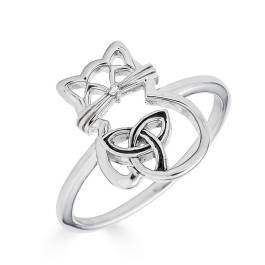
Celtic Cat Ring — $119.99
Black cats with knowing eyes haunt Irish folklore, from the shape-shifting púca to the fairy cat of Samhain night. Shop the Celtic Cat Ring →
Helpful or Harmful? The Púca's Dual Nature
The púca is not a demon and not a guardian angel. It is a trickster, and its behavior depends on its mood and on how people treat it. In its darker moods it frightens livestock, sours milk, tramples fences, spoils crops and leads travelers into bogs. In kinder moods it guides lost people home, warns farmers of coming storms, and brings a good harvest.
The púca can also speak with a human voice. Folklore says it enjoys a long conversation and will sometimes share wise advice or an uncanny prophecy. Then, without a word of farewell, it is simply gone, leaving the listener to wonder whether the whole encounter was a dream.
The Púca's Wild Midnight Ride
The best-known púca tale is the wild ride. A traveler making his way home late at night, often after one drink too many at the pub, meets a fine black horse standing quietly by the road. The moment he climbs on, the horse bolts. The púca gallops through the dark at impossible speed, leaping stone walls, hedges, ditches and rivers while the rider clings on in terror.
At the first gray light of dawn, the púca throws its rider into a ditch or a muddy field, shaken, bruised and far from home, but otherwise unharmed. Only one man was ever said to have ridden the púca safely: Brian Boru, the High King of Ireland, who used three hairs from its tail to control it. The púca was forced to promise it would never again attack a Christian or harm an Irishman, except those who were drunk or out doing evil.
The Púca and Samhain
The púca is most powerful at Samhain, the Celtic festival of October 31 that marked the end of the harvest and the beginning of winter. On that night the boundary between the living world and the spirit world grew thin, and creatures like the púca, the banshee and the headless Dullahan walked freely. Families carved turnip lanterns to keep such spirits away, the custom that became the jack-o'-lantern.
Púca's Day and the Púca's Share
November 1 was remembered in parts of Ireland as Púca's Day. Any crops still standing in the fields after Samhain were believed to belong to the púca. Reapers deliberately left a few stalks behind at harvest as the púca's share, and it was bad luck to take them.
The Blackberry Warning
After Samhain, wild blackberries were never picked or eaten. The púca was said to spit on them, or foul them, making them unfit to eat. Anyone who has tasted a watery, frost-damaged blackberry in November can understand where the belief came from.
Rain on a Sunny Day
Rain falling while the sun shines was taken as a sign that the púca would be out that night. In a country where sun showers are common, the púca was never far from anyone's mind.
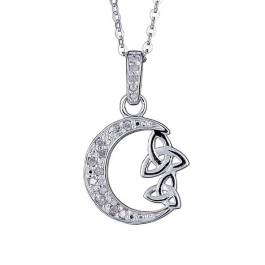
Diamond Celtic Moon Pendant — $179.99
The púca rides by moonlight, and Samhain begins when the moon rises on the dark half of the year. Shop the Diamond Celtic Moon Pendant →
Where to Find a Púca: Pooka Pools and Poulaphouca
Irish folklore places the púca in wild, open country: mountainsides, bogs, lonely crossroads and the edges of lakes and waterfalls where a horse could run free. Several places in Ireland carry its name. The best known is Poulaphouca in County Wicklow, from the Irish Poll a' Phúca, meaning the púca's hole. A waterfall on the River Liffey once plunged through a deep gorge there, a spot said to be a favorite haunt of the creature. Today the name lives on in the Poulaphouca Reservoir, which supplies water to Dublin.
The Púca in Literature and Pop Culture
Few Irish creatures have traveled as far as the púca. Shakespeare's Puck is a close English cousin. Flann O'Brien's comic novel At Swim-Two-Birds (1939) features a scheming character called the Pooka MacPhellimey. The most famous pooka of all is Harvey, the invisible six-foot rabbit from Mary Chase's Pulitzer Prize-winning 1944 play, brought to the screen in 1950 with James Stewart. More recently, the Easter Bunny character in the animated film Rise of the Guardians (2012) is described as a Pooka.
In Ireland itself, the creature gave its name to the Púca Festival, first held in County Meath in 2019 to celebrate Samhain as the ancient origin of Halloween.
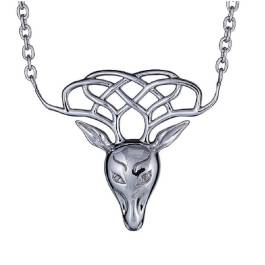
Celtic Stag Necklace — $159.99
The púca rules the wild places of Ireland, and so does the Celtic stag, a symbol of strength and renewal that runs the autumn hills. Shop the Celtic Stag Necklace →
Regional Variations of the Púca
The Irish púca is the wildest version: feared, respected, and tied to rural landscapes and the harvest. The Welsh pwca behaves more like a household spirit that helps families in return for kindness. The English Puck is playful and theatrical, a bringer of harmless chaos. The pouque of the Channel Islands is a shy spirit of remote places. For more of Ireland's darker legends, see our guide to scary Irish mythological creatures.
Carry a piece of these legends with you. Explore our Celtic Creatures collection, our Irish Folklore jewelry, and our Samhain gifts.
People Also Ask
What is an Irish púca?
An Irish púca is a shape-shifting spirit from Celtic folklore, usually seen as a sleek black horse with glowing eyes. It can also become a goat, hare, cat, dog or a man with animal ears. The púca is a trickster that may bring good fortune or ruin, depending on how it is treated.
What does pooka mean?
Pooka is the English spelling of the Irish word púca, meaning a spirit, sprite or goblin. It names the shape-shifting creature of Irish folklore, also spelled phouka and puca. The same root appears in Welsh as pwca and in English as Puck, the mischievous fairy of Shakespeare's A Midsummer Night's Dream.
Is a púca good or evil?
A púca is neither wholly good nor evil. In some tales it ruins crops, spoils blackberries and carries riders on terrifying night gallops. In others it guides lost travelers, warns of danger or offers prophecies to people who treat it with respect. Its mood, and your manners, decide which side you meet.
What does a púca look like?
The púca's favorite form is a dark, sleek horse with a wild mane and glowing golden or yellow eyes. It can also appear as a black goat, a hare, a cat, a dog or an old man. In human shape it often keeps an animal feature, such as pointed ears or a tail.
Frequently Asked Questions
How do you pronounce púca?
Púca is pronounced POO-kah, with the stress on the first syllable and a long oo sound, marked by the accent over the u. The English spelling pooka reflects that pronunciation. The Irish plural is púcaí, pronounced roughly POO-kee. The Welsh form, pwca, is pronounced much the same way.
Is the pooka a fairy?
Yes. In Irish tradition the pooka is counted among the fairy folk, the aos sí, but it is a solitary and unpredictable member of that world. Unlike trooping fairies that travel in bands, the púca usually acts alone, roaming wild hills, bogs and lonely roads, especially after dark and around Samhain.
What is Púca's Day?
Púca's Day is November 1, the day after Samhain. Folklore held that the púca claimed any crops or wild blackberries left unharvested by then, spitting on or spoiling them. Reapers left a few stalks standing as the púca's share, and careful families would not eat blackberries after that date.
Is Harvey the rabbit a pooka?
Yes. Harvey, the invisible six-foot rabbit in Mary Chase's Pulitzer Prize-winning 1944 play and the 1950 film starring James Stewart, is described as a pooka. The story draws directly on Irish folklore, where the púca could take the shape of a large animal and befriend people it chose.