

The Celtic stag symbolizes strength, nobility, leadership, and rebirth. Sacred to Cernunnos, the antlered god of the forest, the stag was one of the most revered animals in all of Celtic mythology. Because a stag sheds its antlers each winter and grows them anew each spring, the Celts saw in it a living emblem of death and regeneration — the same eternal cycle they honored at Samhain, when the old year died and the new one began.
The Stag in Celtic Mythology
To the ancient Celts, the stag was the king of the forest and a creature that moved between worlds. Its appearance at the edge of a wood — especially a white stag — was read as an invitation from the Otherworld, a summons to adventure or transformation. Irish and Welsh legends are filled with heroes led into the unknown by a stag they could never quite catch: the chase itself was the message. In the great Irish tales, the warrior Fionn mac Cumhaill's own son Oisín ("little deer") was born of a woman transformed into a doe, binding the deer bloodline into Ireland's most famous heroic cycle.
Cernunnos: The Antlered God
The stag's deepest significance flows from Cernunnos, the horned god of Celtic religion. Depicted on artifacts like the famous Gundestrup Cauldron seated cross-legged with a great rack of antlers, Cernunnos ruled the forest, wild animals, fertility, and the Underworld. He was the lord of the hunt and, paradoxically, the protector of the hunted — the god who governed the give and take between humans and nature. Wearing the stag's image invoked his protection and his mastery of life's cycles.
Why the Stag Means Rebirth
The stag's antlers make it unique among Celtic animal symbols. Each year the antlers are shed completely — a small death — and each year they return larger than before. The Celts, whose spiritual calendar turned on cycles of dying and returning light, saw the stag as proof written into nature that endings are beginnings. The antlers' resemblance to tree branches deepened the symbolism, linking the stag to the Tree of Life, roots and crown mirroring each other.
The Celtic Stag at Samhain
Samhain marked the start of winter — the season when stags rut, clash, and then cast off their antlers. The festival's themes of death and renewal made the stag one of its natural emblems, alongside the cait sidhe and the owl of the goddess Cailleach. Some scholars believe antlered costumes were worn in Samhain rituals honoring Cernunnos, a practice that echoes in later horned figures of European winter folklore.
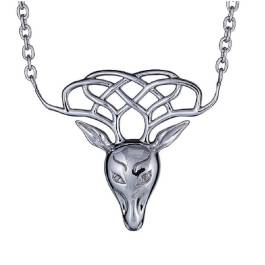
Our Celtic Stag Necklace captures the antlered king of the forest in sterling silver — a wearable emblem of strength, heritage, and renewal, and part of our full Celtic Creatures collection.
Frequently Asked Questions About the Celtic Stag
What does the stag symbolize in Celtic culture?
In Celtic culture the stag symbolizes strength, nobility, leadership, and rebirth. It was sacred to Cernunnos, the antlered god of the forest and the Underworld. Because stags shed and regrow their antlers annually, the Celts viewed them as living proof of nature's endless cycle of death and renewal.
Who is Cernunnos?
Cernunnos is the antlered god of Celtic religion, ruler of forests, wild animals, fertility, and the Underworld. He is most famously depicted on the Gundestrup Cauldron, seated cross-legged with a full rack of stag antlers. The stag was his sacred animal and living representative in the mortal world.
What does seeing a stag mean spiritually?
In Celtic tradition, seeing a stag — especially a white stag — signaled a message or invitation from the Otherworld. It marked the threshold of transformation, adventure, or a new phase of life. Celtic legends often describe heroes being led to their destinies by a stag they pursue but never capture.
Why is the stag connected to rebirth?
The stag sheds its antlers completely every winter and regrows them every spring, larger than before. The Celts read this cycle as nature's demonstration that death leads to renewal. The antlers' branch-like shape also linked the stag to the Tree of Life, another central Celtic symbol of regeneration.
What is the difference between the Celtic stag and Celtic deer symbols?
They represent two aspects of the same sacred animal. The stag (male) embodies strength, protection, leadership, and the god Cernunnos, while the doe (female) embodies gentleness, grace, and the feminine spirit of the forest — in Irish legend, the hero Oisín was born of a woman transformed into a doe.


